A step-by-step guide to voting in Minnesota's primary election
Minnesota's 2026 primary is Tuesday, August 11th. Here's what the process looks like from start to finish.
1. Preparing to vote
Check your voter registration
If you’ve moved, changed your name, or haven’t voted in a while, or just want to be sure, it’s a good idea to double-check your voter registration ahead of election day. Don’t worry if you find you aren’t registered – you can register at the polls right before casting your ballot! We’ll talk more about that in a moment.Tip (from experience): Don’t forget to use your full legal first and last name when searching for your registration.
Look up your assigned polling place
Minnesota assigns voters to a specific polling place based on address. This is usually a school, church, or community center within a few miles of home. The Secretary of State's poll finder confirms the exact location, along with hours (7 a.m. to 8 p.m. on Election Day).
Preview your sample ballot and research candidates
The same site lets you pull up a sample of your actual ballot before you vote. Because primary ballots list every candidate running for a party's nomination (sometimes several per office), seeing the names in advance gives you time to look candidates up rather than deciding in the booth.
Voters also have the right to bring a printed sample ballot or notes into the voting booth with them.
Research candidates
There are two DFL-endorsed candidates in contested races on the ballot for SD-14A (Abdi Daisane and Peggy Flanagan), and one in SD-14B (Peggy Flanagan). These candidates weren’t endorsed by “the party” but rather by the people – in Minnesota, endorsements start at the grass-roots level and are voted on by regular citizens like you!
2. Checking in at the polling place
Every polling place has a check-in table staffed by election judges. If you are already registered to vote, you only need to provide your name, confirm your address, and sign a roster. Minnesota has an outstanding record of election security, and our election systems have been tested and proven to enable all eligible voters to exercise their constitutional right to vote.
If you need same-day voter registration
Minnesota is one of a handful of states that allows voters to register and vote in the same visit. To register at the polling place, you'll need one proof of residence, which can be any of the following:
A valid Minnesota driver's license, learner's permit, or state ID
A Tribal ID showing name, address, photo, and signature
A current photo ID (even if expired) paired with a separate document showing your current name and address — a utility bill, bank statement, or lease dated within 30 days of the election
A registered voter from your own precinct, who can accompany you and confirm your address under oath
Once that's sorted, you're handed a ballot.
3. Marking and casting your Minnesota primary ballot
This is the step that's different from a general election.
Choose one party's column
A Minnesota primary ballot for partisan offices (governor, Congress, state legislature) is printed in separate columns, one per major party. Voters can vote for candidates from only one column. Marking candidates from more than one party invalidates those votes.
There's no need to register with a party in advance; the choice is made privately, in the booth, and Minnesota keeps no record of which party's column a voter selected.
Nonpartisan races such as city council and school board appear separately and aren't affected by this rule.
How your vote gets counted
Minnesota primary ballots are paper. After marking it, you will bring the ballot to an optical scan machine and feed it in yourself — no election judge reviews or touches the marked ballot at any point. The scanner reads and stores the vote, and the paper ballot itself is retained, which is what allows for audits and recounts later if a race is close.
4. Sticker time!
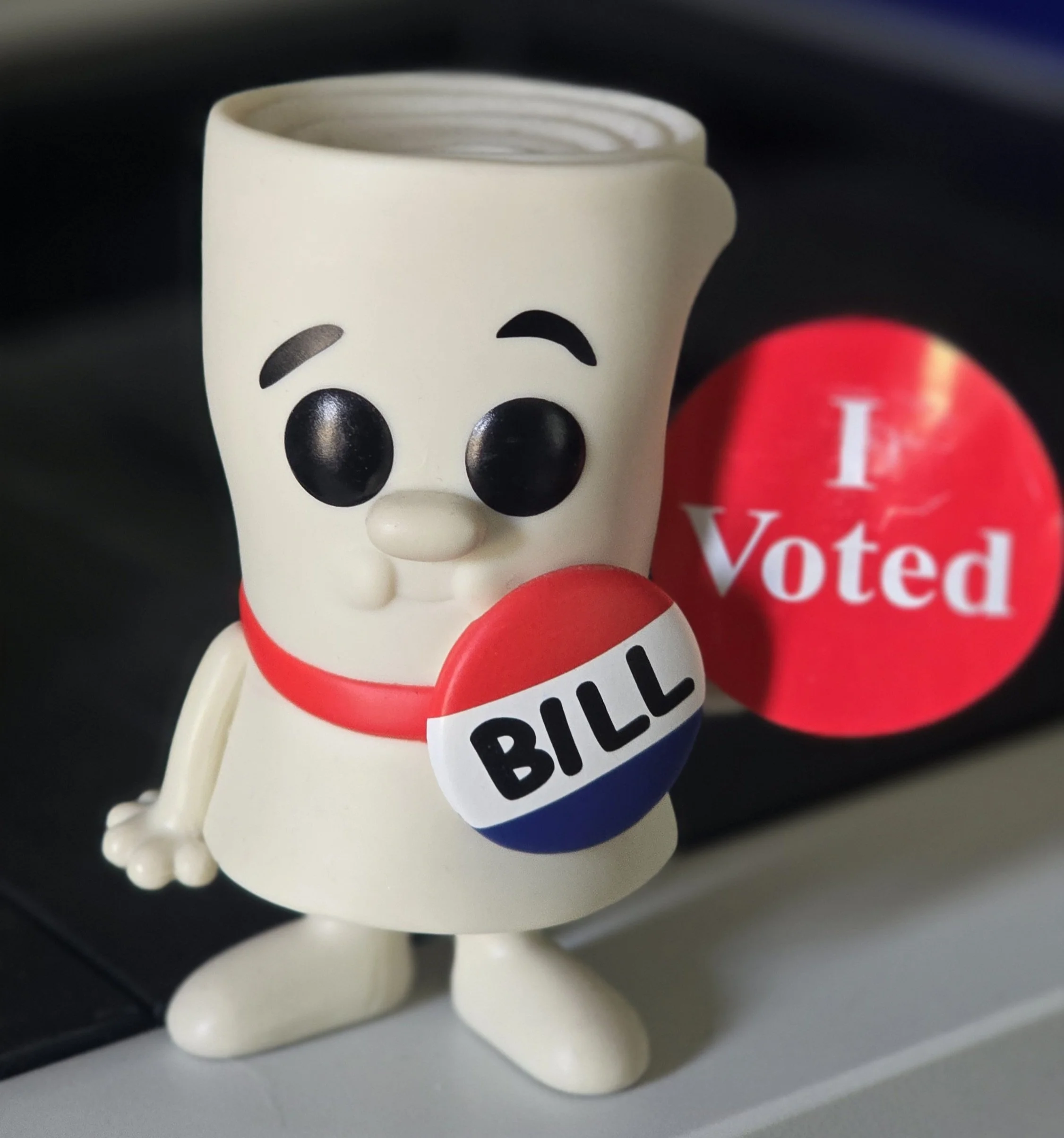
Once the ballot is scanned, most polling places hand out an "I Voted" sticker on the way out. For most people, voting takes five to ten minutes from check-in to sticker. This can be longer only if a line has formed or same-day registration is needed.
Minnesota polling place etiquette: A short FAQ
A few rules apply inside every Minnesota polling place, and they're less about restricting anyone and more about keeping the space neutral and voters' choices private.
Can I wear a campaign shirt, button, or hat?
No. Minnesota law prohibits clothing, buttons, or literature naming a specific candidate, party, or ballot question inside the polling place or within 100 feet of the building. If a voter arrives wearing something political, an election judge will typically ask them to cover or remove it before entering..
Can I take a photo of my ballot or the voting booth?
It's discouraged, and photographing your own marked ballot can run into Minnesota's ballot privacy statutes. The concern isn't really about the photo itself — it's that a picture can reveal how someone voted, which the law is built to protect against, even when that someone is the voter themselves.
Can I write on my ballot or put a sticker on it?
No. Marks, initials, or stickers placed anywhere on a Minnesota ballot, including in the write-in space, can invalidate it.
Can someone help me vote?
Yes. Any voter can bring a friend, family member, or other helper of their choosing — the only people who can't assist are an employer's or union's representative.
If you have any additional questions, the Minnesota Secretary of State’s website is an excellent resource for all your voting and election questions!
Thank you for voting!