Your first door-knock: What to expect
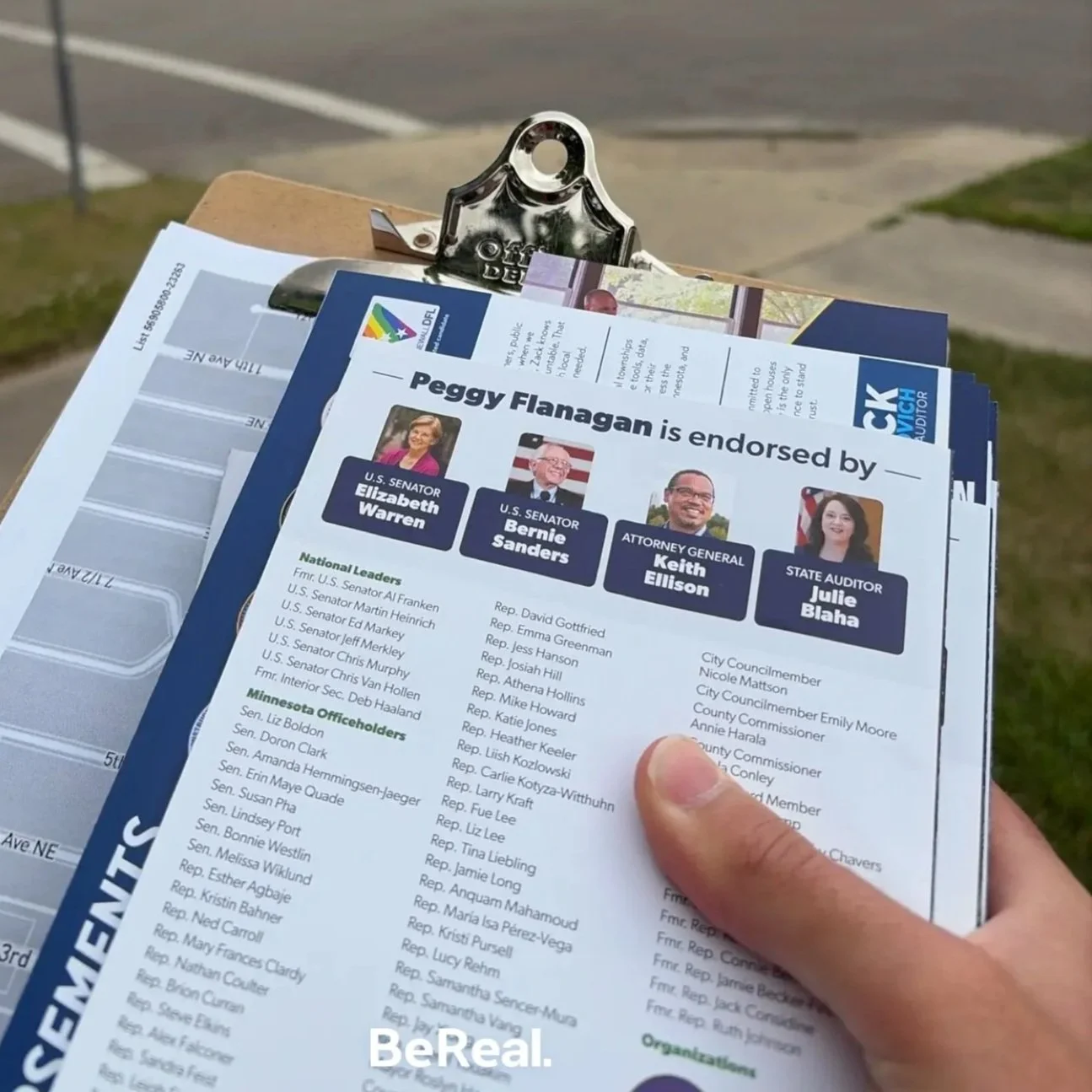
The first time you knock on a stranger's door to talk politics, it's normal to feel a flutter of both excitement and nerves. Most people do. What tends to surprise first-time canvassers isn't how hard it is, but how much easier it gets after the first knock.
This post walks through exactly what to expect, so you can walk up to that first door feeling ready.
Key Takeaways
Your job is to listen, not to win an argument or talk anyone into anything.
A short list of materials and a walking partner make the first shift easier.
Research on volunteer canvassing (another term for door-knocking) shows people open up more with a genuine question than a scripted pitch.
What you hear at the door is used by the campaign.
What actually happens when you knock on a door
Canvassing shifts start with a walk list: a set of addresses assigned for that day, usually covering a few blocks close together. Volunteers work in pairs or small groups, and each person knocks their own doors while checking in with the group along the way.
What to do when they answer the door
When someone answers, keep it simple. Say who you are, mention the organization you're with, and ask something real: how they feel about things locally, or whether they've thought about an upcoming election. The best conversations start with a sincere ask rather than a scripted pitch.
Remember: you're not selling anything
A lot of first-time canvassers show up with counterarguments ready, just in case someone disagrees. You almost never need them. Your job at the door is to ask a genuine question and actually listen to the answer, not to change anyone's mind on the spot. Remember: you're not there to win anyone over. You're there to hear what's actually on their mind.
Why listening works best when door-knocking
A multi-state pilot of volunteer canvassers in 2025 tracked hundreds of door-to-door conversations across nine states, and the findings validate the “listen, don’t pitch” approach.
If you want to learn why canvassing is one of the best ways to connect with voters, read What is canvassing, and why does it work?
People open up more than you'd think
When people were asked an open question instead of being hit with a pitch, about two out of three stayed for a real conversation, often ten minutes or longer. That's a far higher response rate than campaigns typically see with a quick reminder to vote.
Almost everyone shares one frustration
Across the same pilot, close to half of all conversations — no matter the voter's party — landed on the same theme: a feeling that the system isn't working for regular people, and that institutions aren't as responsive as they should be. That held true whether the person at the door leaned left, right, or hadn't settled on either. It's a good thing to carry with you into a shift. These conversations aren't about scoring points. They're about someone wanting to be heard.
Disagreement doesn't end the conversation
The research also found that conversations with people who disagreed with the canvasser stayed civil and often ran long anyway. Staying curious instead of combative is what keeps someone talking even after they've told you they see things differently. A respectful disagreement at the door is a sign the conversation is going well, not a sign it's gone wrong.
What to bring and how to prepare for your first door-knock
Most organizations you canvass with will hand you a walk list, either on paper or through an app, along with a quick training beforehand.
Bring along:
A phone or tablet if the canvass uses a walking app, or a printed list and clipboard (this is typicaly supplied) if it doesn't
Comfortable shoes and weather-appropriate clothing
Water, and sunscreen or a hat depending on the season
Any ID or name tag the organization provides
Most canvasses pair you with a partner or keep small groups within sight of each other. That's partly for safety, and partly because it's genuinely nice to compare notes between doors. You can skip a house any time you want to — a locked gate, a "no soliciting" sign, or just a feeling that it's not the moment are all good enough reasons.
Handling different kinds of doors
Not every stop goes the same way, and knowing what to expect ahead of time takes a lot of the guesswork out of it.
The quick no
Some people will say they're not interested and close the door within a few seconds. That's a complete conversation, not a failed one. A friendly "thanks for your time, have a good one" is all you need to say.
The long porch conversation
Other conversations run fifteen or twenty minutes, usually because someone has a lot they want to get off their chest. Your job there is mostly to keep listening, ask a real follow-up question if one comes to mind, and jot down what mattered most to them.
When someone disagrees with you
Someone might push back hard, or tell you they're backing a different candidate entirely. That's not a setback! This information is useful, and it's still a conversation worth having. Stay respectful, resist the urge to argue point by point, and thank them for talking with you. Some of the best conversations canvassers have are with people who disagreed the whole way through and still stood there talking.
What happens to your notes after the door-knock
Notes from each conversation get logged, usually through the same app or list you used on your walk. That information gets pulled together to understand what people in a neighborhood actually care about, and it shapes follow-up conversations and where attention goes next.
Ready to give it a try? Check our calendar for the next scheduled canvass in the St. Cloud area, or reach out through the contact page if you have questions.