What is canvassing, and why does it work?
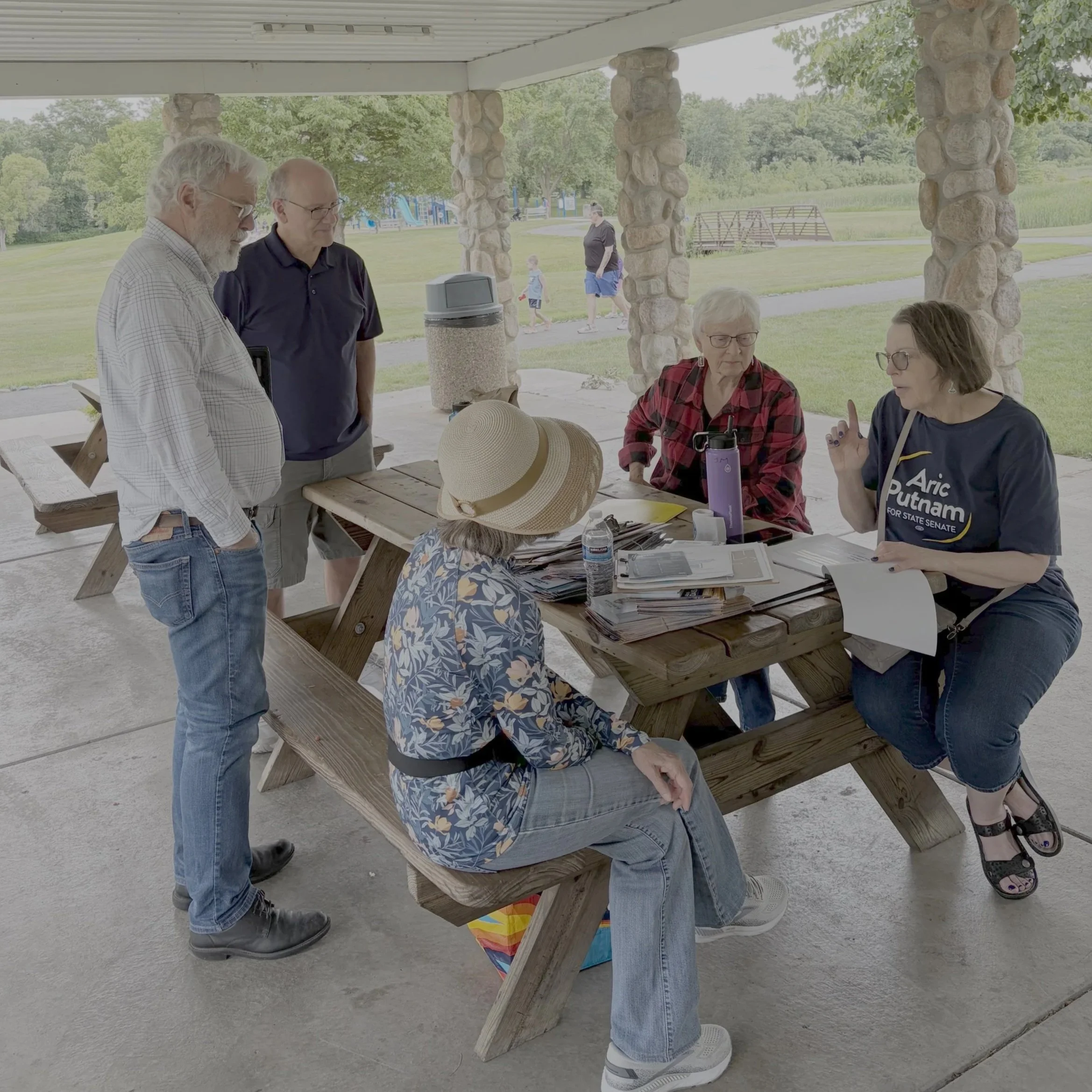
Minnesotans are known from rolling up our sleeves and helping out when needed. That same drive for pitching in fuels canvassing, one of the most effective forms of civic participation in American politics.
If you're looking for a way to get involved this election season, canvassing is a natural next step.
Key Takeaways
Canvassing involves visiting community members door-to-door and having short, sincere conversations about candidates and the upcoming election season.
The goal is to get more people to the polls, especially the neighbors least likely to hear from a campaign any other way.
Minnesota was part of the original large-scale research on canvassing in 2001
The study found that face-to-face contact consistently increases voter turnout more than phone calls, mail, or digital outreach.
The effect is strongest for occasional and first-time voters — the people least likely to hear from a campaign any other way.
Canvassing shifts are happening now in Central Minnesota, and no experience is required to join one.
What is canvassing?
Canvassing is organized, in-person voter contact. A volunteer works from a set of addresses generated from voter files (called a “walk list”), usually grouped by neighborhood, and knocks on each door with a short, prepared message. The goal might be encouraging someone to vote, sharing information about a candidate, or simply finding out what issues matter to the people who answer.
Most conversations last well under a minute, and it's common for several doors to go unanswered or for the person who answers to have no interest in talking. That's a normal part of a shift, not a sign it went poorly.
Volunteers typically check in with an organizer before heading out, get their walk list and talking points, and check back in afterward to report what they heard. The format is structured enough that first-time volunteers can join without prior experience.
Does canvassing actually work?
Yes! And there's real research behind it. Political scientists have been testing this with controlled studies since the late 1990s.
+ 6% in voter turnout
2x more effective at getting first-time voters to the polls
10 minute, unscripted conversations shown to have long-term impact
One of the first big studies happened in New Haven, Connecticut. Researchers Alan Gerber and Donald Green tracked who voted after a canvassing push, and the numbers were striking: turnout jumped from about 44% among people who weren't visited to 53% among people who were. That's a nine-point swing from one conversation at the door. Naturally, researchers wanted to know if canvassing would have the same impact elsewhere.
Minnesota becomes a testing ground for canvassing research
In 2001, researchers ran the same experiment in six cities: Bridgeport, Columbus, Detroit, Raleigh, and both Minneapolis and St. Paul.
The pattern held everywhere: people who got a visit voted at higher rates than people who didn't. Looking across the wider body of research, canvassing typically boosts turnout by about 6 percentage points. And a more recent study out of Sweden found something worth noting for anyone new to this — the effect was roughly twice as strong for occasional and first-time voters as it was for people who already vote every election.
It's not just about turnout
A knock on the door can do more than get someone to the polls. One study in South Florida had volunteers have a real (unscripted) ten-minute conversation with people. Three months later, people who'd had that conversation showed a measurable, lasting drop in prejudice. The takeaway: when a conversation is genuine, it can actually change how someone sees an issue.
“When a conversation is genuine, it can actually change how someone sees an issue.”
Why face-to-face contact is important in politics
The research points to a consistent explanation: personal, direct contact works better than impersonal contact, regardless of the message. More personalized methods and messages consistently outperform less personal ones, while mass email and automated phone calls are chronically ineffective at moving people to vote.
Context, timing, and how a program is run all matter. But across the broader body of research, in-person contact remains the most consistently effective tool available for reaching voters who might otherwise be missed.
Canvassing in Central Minnesota is happening right now
The DFL runs regular canvassing shifts across Stearns, Benton, and Sherburne counties, including ongoing efforts in the St. Cloud area. Shifts start with a brief training, so first-timers aren't expected to know what they're doing before they arrive. Bring comfortable shoes and a willingness to talk with neighbors!
If you're in the St. Cloud area and are ready to see what canvassing is all about, sign up below and we’ll be in contact about upcoming canvassing shifts.