What Minnesota Democrats are doing about rising health care costs
What's driving your bills higher
Premiums rose more than 20% this year after a federal tax credit expired.
Medicaid cuts are now threatening to close the hospitals Minnesotans rely on.
Health care itself keeps getting more expensive.
Health insurance premiums for Minnesotans who buy their own coverage rose by more than 20 percent this year, the biggest jump since 2017. Employer-based premiums rose too, though by less. Here's what changed and what's being done about it.
Why is health insurance so expensive right now?
Two different things happened at the same time that have contributed to the increase.
A federal tax credit expired
For the last few years, the federal government helped people pay for health insurance bought on their own, through a program called MNsure. That helped lower monthly bills for close to 89,000 Minnesotans — 11,000 of whom live in our own 6th Congressional District.
That help started in 2021 as part of COVID-era relief, meant to keep people from losing coverage during the pandemic. It worked well enough that Congress extended it again in 2022, and enrollment in MNsure-style marketplace plans more than doubled nationally as a result, with the uninsured rate falling to record lows.
That extension was still temporary, though, and it expired at the end of 2025 after the Republican-controlled Senate blocked a bill to renew it.
Starting in 2026, many families are paying hundreds of dollars more every month for the same insurance plan they had last year.
Health care itself keeps getting more expensive
Insurance would have gone up this year even without the tax credit change. Doctor visits, hospital stays, and medicine all cost more than they did last year, and insurance companies raise prices to cover those costs.
A few things are driving that. Hospitals and clinics have been merging into larger systems, and larger systems face less competition to keep prices in check. Minnesota is watching this play out right now: Sanford Health, a South Dakota-based system, has proposed acquiring North Memorial Health, which would put two more Twin Cities hospitals under out-of-state control, while California-based Sutter Health is separately moving to acquire Allina Health.
Research on hospital mergers like these has generally found they lead to higher prices, even when the deal comes with promises of new investment.
Another factor: New medical treatments and technology cost more to develop and deliver. Health care workers are in short supply in a lot of places, which drives up wages, and wages are part of what a hospital bill covers. Prescription drugs cost more in the United States than in almost any other country, for reasons that have little to do with what it actually costs to make them.
These are structural problems, and no single policy fixes all of them at once. That's why the plans below tackle more than one piece of the cost problem, from drug prices to insurance company practices to Medicaid funding.
What Medicaid cuts are doing to Minnesota's hospitals
Rising premiums aren't the only cost showing up right now. Trump and Republicans in Washington pushed through the One Big Beautiful bill, a budget package signed in 2025 that cuts roughly $1 trillion from Medicaid nationally. This move, championed by Rep. Tom Emmer, is straining the hospitals Minnesotans depend on, and rural communities are feeling it first and hardest.
Rural hospitals are closing service lines to survive
Nineteen Minnesota rural hospitals are currently at risk of closing, and six of those are considered at immediate risk within the next two to three years. At some rural hospitals, three out of every four patients rely on Medicaid or Medicare, so a cut in federal reimbursement hits those facilities hardest. Hospitals across the state have already closed nineteen labor and delivery programs, meaning some rural families now have to drive much farther to safely deliver a baby.
Even Hennepin County Medical Center, a hospital even rural patients rely on, is at risk
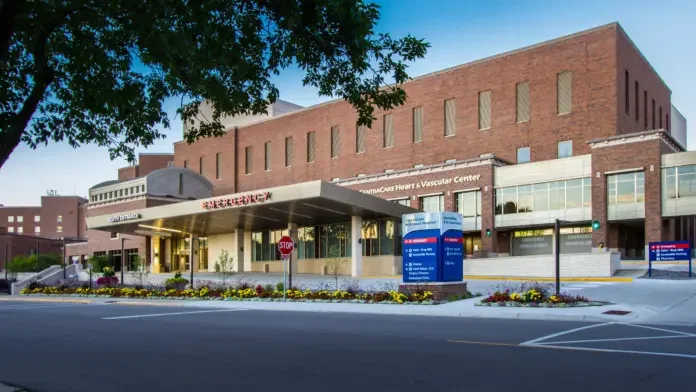
When a rural hospital can't handle a serious trauma, the patient often gets routed to Hennepin County Medical Center (HCMC) in Minneapolis, Minnesota's busiest Level 1 trauma center and the hospital with the depth of specialists to handle the most complex emergencies. That hospital is now in its own financial crisis. HCMC gets 81 percent of its funding from Medicaid and Medicare, and it's projecting up to $1.7 billion in losses over the next decade, driven in large part by the same federal Medicaid cuts. The hospital has already cut 100 beds and reduced the outside transfers it can accept.
That matters well beyond Minneapolis. When the hospital rural patients get routed to in an emergency is also under financial strain, the entire state's emergency care network gets less reliable, not just one region's.
Why health insurance is tied to your job in America
During World War II, the federal government froze wages to control inflation, but the freeze didn't apply to benefits like health insurance. So employers started offering health coverage instead of raises to compete for workers. A 1954 tax law made it permanent by letting employers deduct the cost and letting workers receive it tax-free.
This is why losing a job in the U.S. often means losing health coverage, and why DFL candidates are focused on Medicaid, drug prices, and marketplace coverage.
What Minnesota is doing about it
Minnesota has its own program that keeps insurance prices from rising even further. Without it, this year's increase would have been closer to 70 percent instead of around 20. Lawmakers extended the program through 2027, and there's an active push at the Capitol right now to keep it going after that.
What DFL candidates are fighting for
Peggy Flanagan, running for U.S. Senate, wants Medicare to negotiate lower drug prices, wants Medicaid protected from cuts, and wants to end the insurance company practice of requiring prior authorization before doctors can give patients care they've already prescribed.
Amy Klobuchar, running for Governor, has a Senate record of taking on pharmaceutical companies and helping lead the fight to let Medicare negotiate lower drug prices.
Attorney General Keith Ellison, running for re-election, used his office to cap the price of insulin at $35 for Minnesotans who need it.
State Senator Aric Putnam, running for re-election in SD14, serves as chair of the Agriculture, Broadband, and Rural Development committee and vice chair of the Higher Education committee, where budget decisions affecting state health programs get made.