What does a campaign volunteer do? A practical guide to getting involved
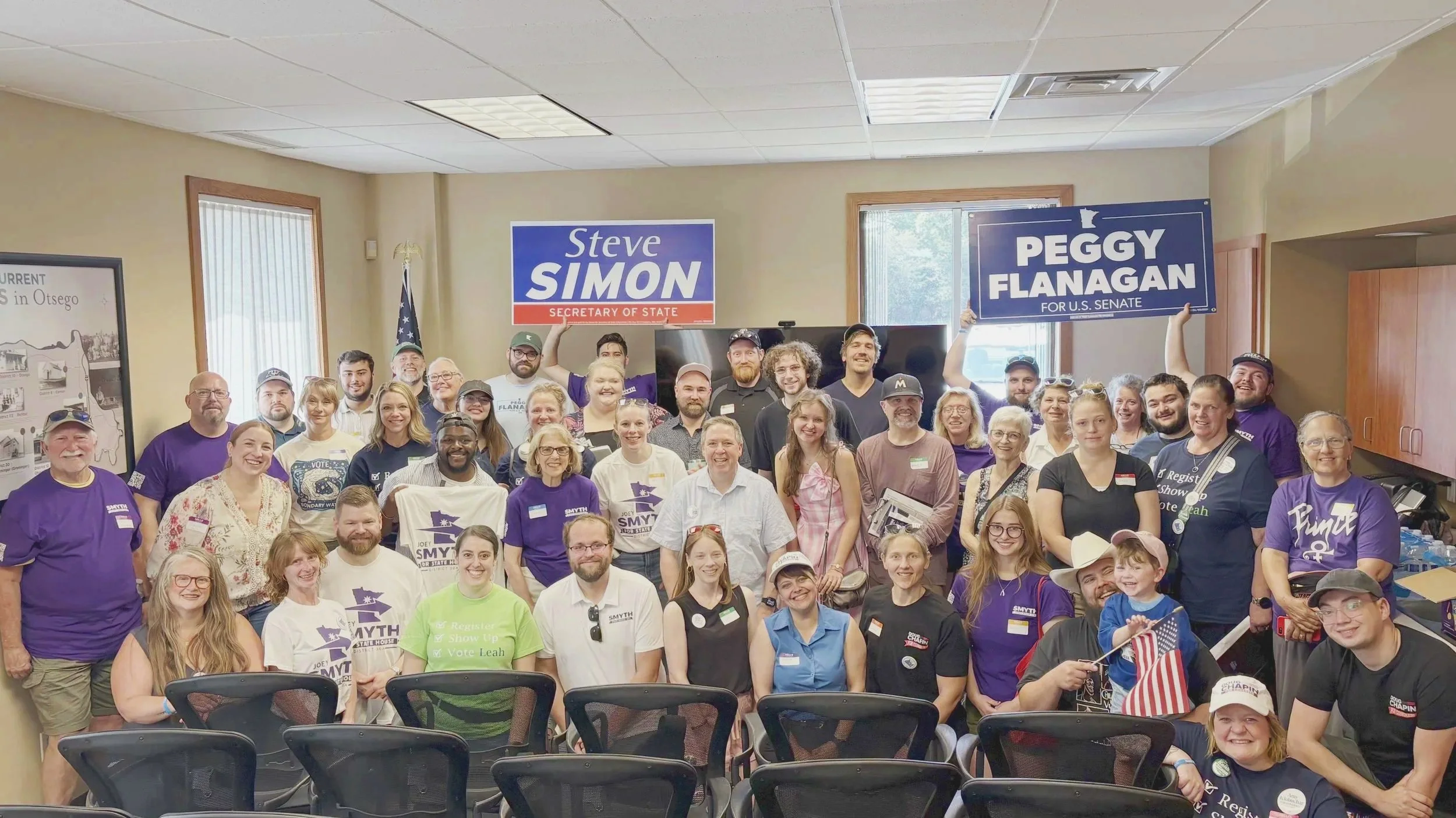
Whether you have skills you want to put to good use or energy that needs an outlet, volunteering with a political campaign is one of the most direct ways to give back to your community.
The catch is that most people don't know what they'd actually be doing — and showing up somewhere without knowing what to expect is uncomfortable enough that a lot of people just don't.
If that's where you are, you're in the right place. Here's what you'd actually be walking into.If that's where you are, you're in the right place. Here's what you'd actually be walking into.
Volunteering helps your community
When you help a candidate get elected, you're helping put someone in office who will make decisions about your schools, your roads, your healthcare, and your paycheck. That's worth your time.
The research on voter contact bears this out. A recent report found that canvassing consistently moves voters across election types. In state legislative and local races, where many SD14 candidates compete, the neighbor-to-neighbor contact advantage is the most meaningful.
What does volunteering actually look like?
Volunteer work falls into a few broad categories:
Voter contact
This is the core of campaign work, reaching voters directly to share information, identify supporters, and turn people out.
Canvassing — going door to door in your neighborhood or a nearby area. Most conversations are short..
Phone banking — calling voters from a list, usually from home or a local office, to share information or remind people about upcoming elections.
Texting — sending scripted messages to voters from your own phone using a volunteer platform. One of the most flexible options because it can be done on your own schedule.
Event support
Campaigns hold a lot of events, such as candidate forums, volunteer trainings, fundraisers, and community events. Event volunteers handle setup, check-in, logistics, and cleanup.
Administrative work
Every voter contact effort runs on data. Volunteers help with:
Entering and cleaning voter data
Updating contact lists after canvassing or phone banking shifts
Managing sign-in sheets and tracking volunteer hours
Helping coordinate schedules and communications
This work happens mostly behind the scenes. It's often the bottleneck that determines how effective everything else actually is.
Visibility
Lit drops — delivering campaign literature to doors without knocking. A good entry point for people who want to help with canvassing but aren't ready for conversations yet.
Community events — showing up for the campaign holding signs or wearing campaign gear at community gatherings (picnics, parades, etc).
Specialized skills
If you work in graphic design, photography, social media, writing, translation, law, or accounting, there's a good chance a campaign needs exactly that!
What does a typical shift look like?
Most shifts run two to three hours. You check in with an organizer, get a brief orientation if it's your first time, work through your task — a list of doors, a call list, a data entry project — and check out at the end. Don’t worry — first-time volunteers are not expected to know everything.
How to volunteer strategically
Think about what you're good at and what your schedule actually allows.
If you're comfortable talking to strangers, canvassing or phone banking is a high-impact place to start.
If you prefer behind-the-scenes work, data and admin roles are always needed and rarely overstaffed.
If your schedule is unpredictable, texting and lit drops offer the most flexibility.
If you have a specific professional skill, lead with that — campaigns will find a use for it.
The best way to find your fit is to try something. Most roles can be learned quickly, and campaigns are used to onboarding new people.
It might be a little rocky. That's okay.
Campaigns are not nonprofits with seasoned volunteer coordinators. They're fast-moving, often understaffed, and built largely by people who are figuring things out as they go. Onboarding might be informal. Communication might lag. Things might feel disorganized at times.
That's a reason to step up. If you see a gap, fill it. If something could run more smoothly, offer to help. Give the campaign grace, bring your best judgment, and know that the imperfection is part of having a grassroots democracy!
SD14 DFL vs. candidate campaigns: What's the difference?
There are two distinct ways to plug in to political volunteer work:
Volunteering with SD14 DFL
Senate District 14 DFL is the local party organization. Volunteering here means supporting the infrastructure that makes everything else possible — organizing events, maintaining voter data, supporting candidate recruitment, and building the community of people who show up year after year regardless of what's on the ballot.
Volunteering with a candidate campaign
Individual candidate campaigns are separate operations with their own staff, volunteers, and goals. Volunteering here means working directly toward getting a specific person elected. Most of the voter contact work — canvassing, phone banking, texting — happens at this level.
Many people volunteer with both!